
What if clothing wasn't disposable?
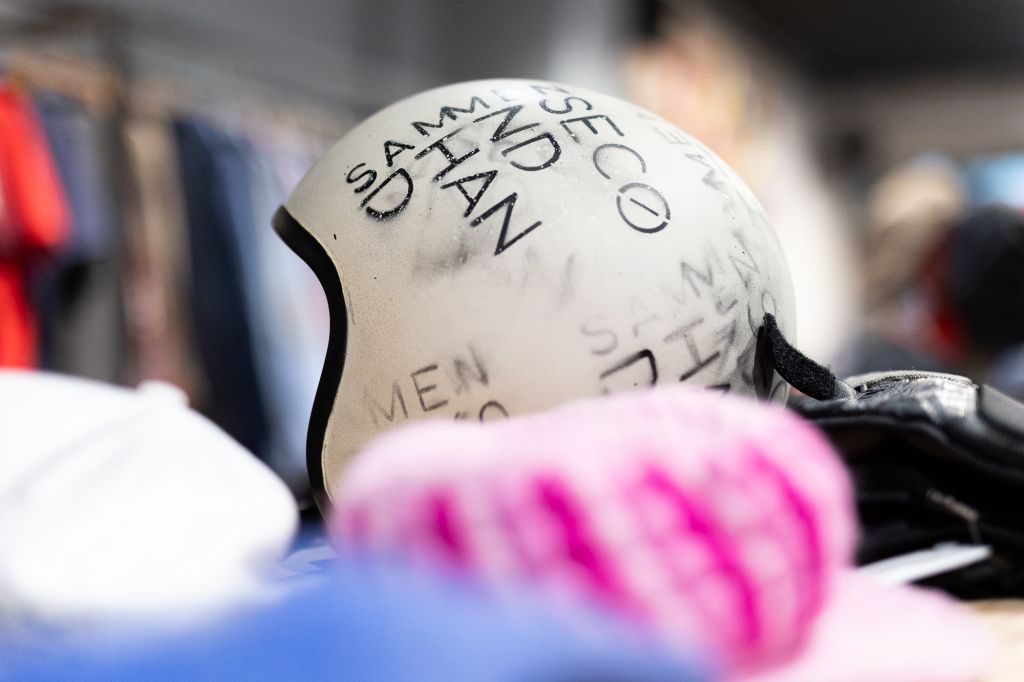
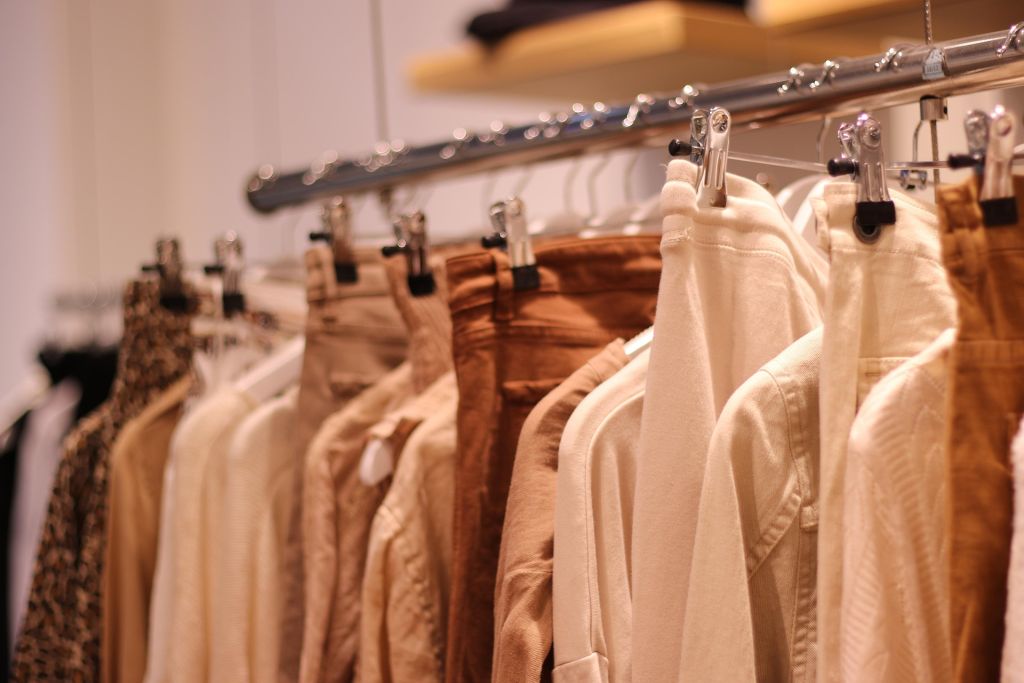
What if buying new clothes were no longer the default, but the exception? And what if garments were designed to return to circulation again and again?
These were not just consumer questions, but ones we explored as students in the Baltic2Hand project. The fashion and textile industry is undergoing a major shift. Fast fashion’s environmental impact, generation of textile waste, and rapid consumption are forcing to rethink how the entire system works. This is no longer about individual choices alone, but about how services, business models, and everyday practices are designed.
When service design makes the circular economy real
Service design sounds theoretical, until you apply it in practice. Within Baltic2Hand, carried out as part of studies at Laurea University of Applied Sciences, theory quickly turned into hands-on learning.
Through workshops and co-creation with international companies, the focus shifted from what is being sold to whom it is for and why.
Solutions were developed through hand-on activities. We conducted user research, ran interviews, observed shopping behaviours, co-created service concepts in workshops and tested prototypes in real-life scenarios.
One key insight stood out, second-hand doesn’t scale on good intentions alone. It needs smooth, effortless services that fit naturally into everyday life. (Laurea 2023.)
When the user journey makes all the difference – The case of Reima
One of the most illustrative learning experiences was connected to the development of Reima’s second-hand online store. The goal of the Baltic2Hand cooperation case was to increase both inbound and second-hand sales. Specifically, the focus was on how to make the selling and reselling of pre-owned clothing just as easy as buying new.
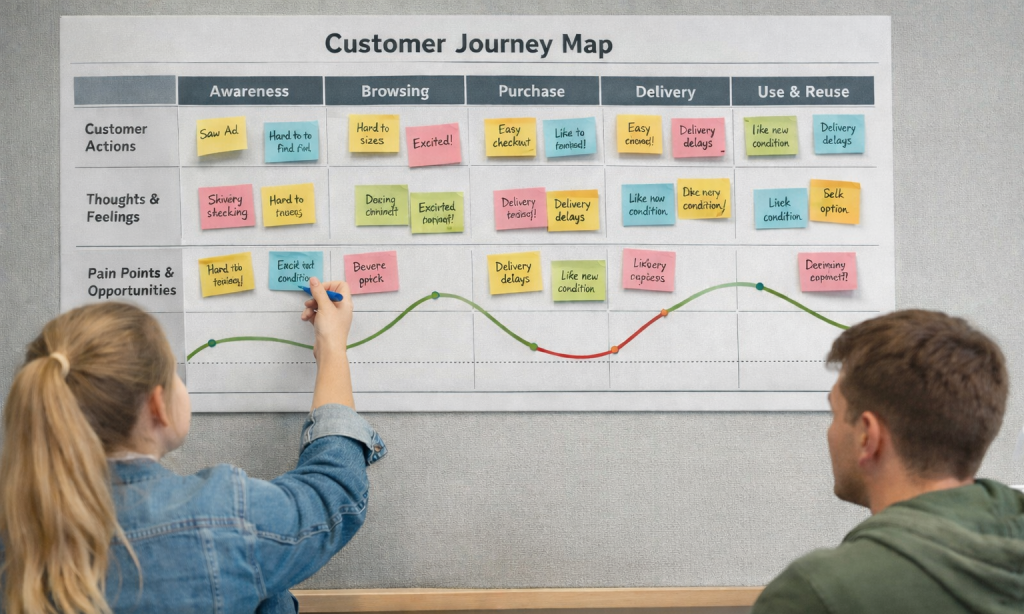
Although customer journey maps had been utilized in the service development even before the Baltic2Hand collaboration, the new focus group studies provided critical depth to the understanding. Specifically, they brought deep customer insight on how to further improve the service and achieve an increase in designed KPIs by creating visualizations that precisely revealed the points where users experience success and where frustration begins.
When the purchasing process is seamless, making a sustainable choice feels natural rather than forced. Reima showed how sustainability and commercial viability can go hand in hand. This is exactly where circular economy succeeds. Not by asking customers to compromise, but by offering better and smarter choices.
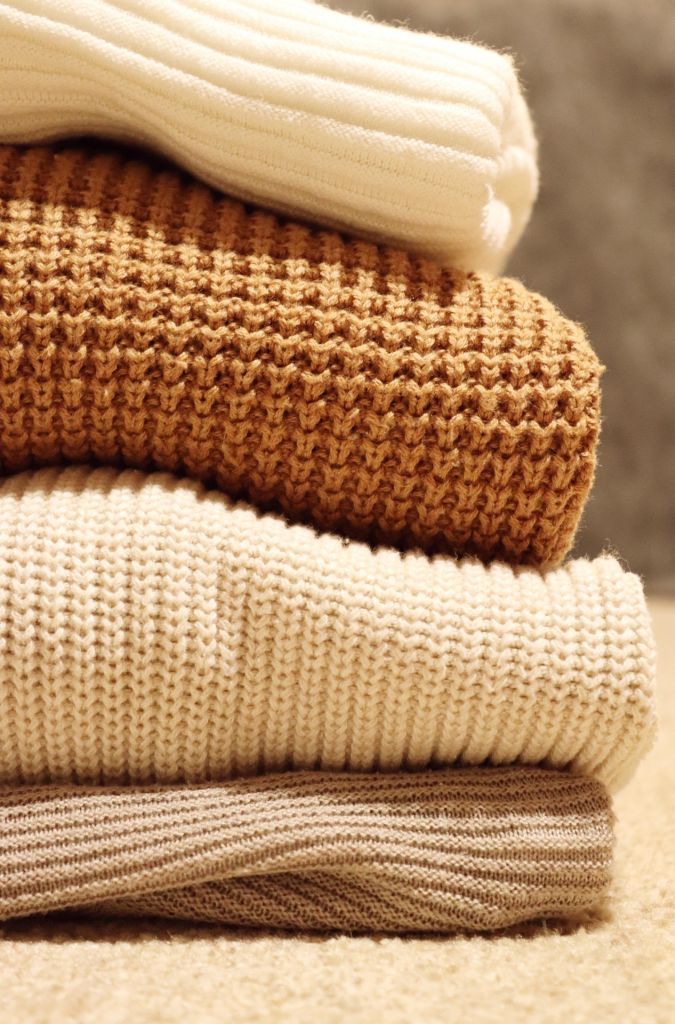
Why Baltic2Hand project is more relevant than ever, and why sustainability is attractive?
According to the Sitra’s Megatrends 2026 report, the planet’s carrying capacity has already been exceeded, pushing societies and businesses to find new ways of operating. The circular economy is highlighted as a key solution for the future, not just environmentally, but also economically and strategically (Sitra 2026).
Second-hand is no longer a niche, especially among younger consumers. For many, buying pre-owned clothing is smart, not just responsible: it can mean better quality, longer lifespan, and more thoughtful consumption. A great thrift-store find is even a statement of personal style and identity.
Baltic2Hand project responds directly to this shift by making sustainable choices easy and appealing rather than exceptional. When brands take an active role, products can live multiple lives. Circular economy doesn’t slow growth, it redefines it (Paytrail 2025.)
What did I take away from this?
For me, Baltic2Hand was more than a project, it was a learning space where theory, megatrends, and real-world development met. Maybe in the future we won’t ask whether a garment is new or second-hand. Maybe we’ll ask how well it’s designed to last, and to return to circulation. If that happens, Baltic2Hand will have been part of making that change possible.
Elise Kaasik
Student
Laurea University of Applies Sciences
Sources
Sitra. 2026. Megatrendit. Reference 18.2.2026 Megatrendit 2026 – Sitra
Laurea. 2023. Baltic2Hand-hanke. Reference 18.2.2026 Baltic2Hand-hanke: Käytetyt tekstiilit käyttöön – Muotoilemassa liiketoimintaa ja kuluttajien käyttäytymistä Itämeren alueella – Laurea-ammattikorkeakoulu
Paytrail. 2025. Verkkokaupan trendit. Reference 20.2.2026 Verkkokaupan trendit 2026